The 3 Most Common Myths About 3AM Wakeups — And What A Sleep Doctor Says Is Really Happening (Plus The 60-Year-Old Technique That Stops It)
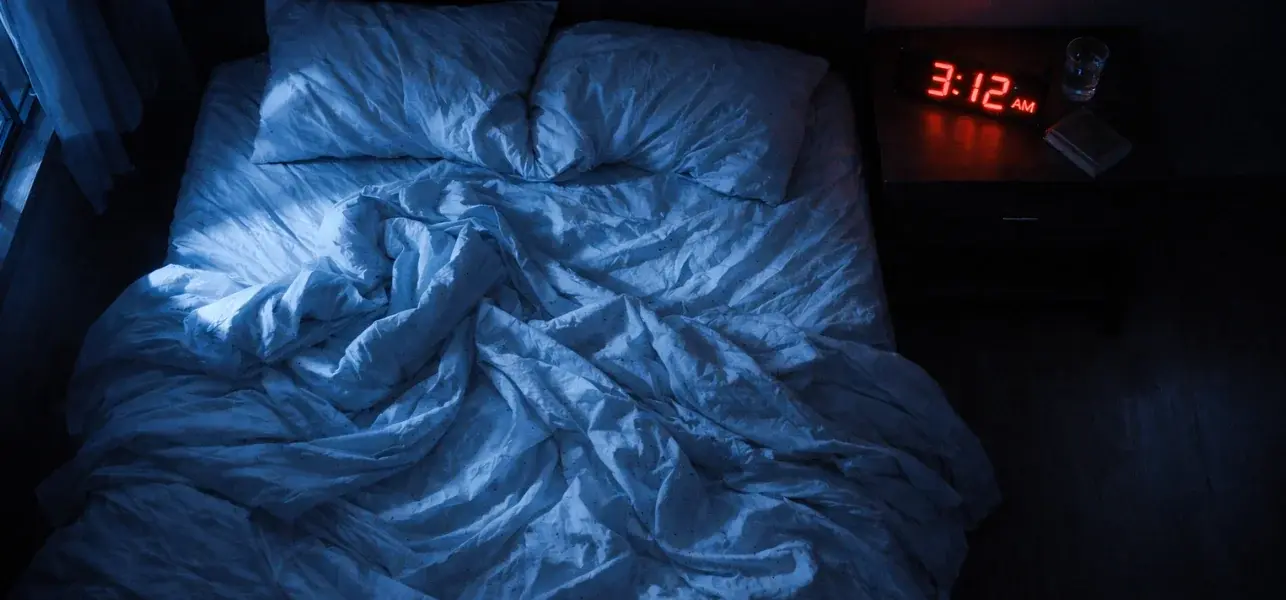
If you wake up between 2 and 4AM — staring at the ceiling, mind racing, body alert even though you’re exhausted — you’re not alone.
You’re tired all day. Irritable. Can’t focus at work.
And every night, you dread going to bed because you know you’ll be awake again at 3AM.
In 2024, the American Psychiatric Association found that 43% of adults globally reported feeling more anxious than the year before — up from 37% in 2023 and 32% in 2022. Seventy percent cited current events as a primary driver. Prescriptions for sleep medication have surged by over 20% in the past two years alone. Employers across multiple industries are reporting record drops in productivity linked to sleep-deprived workers.
The world has gotten louder. And our bodies are absorbing all of it — whether we’re consciously thinking about it or not.
We recently surveyed 6,783 adults about their sleep struggles. The number one problem? Waking up in the middle of the night.
So I sat down with Dr. Sarah Mitchell, a sleep specialist who’s spent 18 years figuring out why some people can fall asleep just fine but can’t stay asleep.
What she told me completely changed how I understand middle-of-the-night wakeups.
Here’s the truth:
Most of what you’ve been told about 3AM wakeups isn’t accurate. And these misconceptions keep you chasing the wrong solutions while the real issue goes unaddressed.
Let me break down the 3 most common myths Dr. Mitchell hears from patients — and the real nervous system issue behind them.
Myth #1: If You Wake in the Middle of the Night, You Have Insomnia

This is the fear that hits after the third night in a row of waking up at 3AM. “I must have insomnia now.”
But here’s what she told me.
“Waking during the night is not automatically insomnia.”
Sleep happens in 90-minute cycles. Most healthy sleepers wake up several times per night — they just fall back asleep so quickly they don’t remember it.
“The difference is whether your nervous system stays calm enough to go back to sleep.”
It’s not that you have a sleep disorder. Your stress response is overactive.
Myth #2: It’s Just Part of Aging

Your doctor tells you with a sympathetic look: “You’re getting older. Sleep changes. It’s normal.”
Dr. Mitchell disagrees.
“Yes, we may sleep a little lighter as we get older. But consistently waking between 2 and 4AM with a racing mind? That’s not typical aging.”
“That pattern points to hyperarousal. The nervous system is not fully switching into rest mode. Your body is stuck in alert mode when it should be in recovery mode. That’s a nervous system issue, not aging.”
Myth #3: You Just Need Better Sleep Hygiene

This is the one Dr. Mitchell hears most — and the one that frustrates her the most.
“People come to me and say, ‘My doctor told me to cut out caffeine. I downloaded a meditation app. I tried a weighted blanket. I take magnesium every night.’ And they’ve done all of it. It hasn’t fixed the 3AM problem.”
“That’s not because they’re doing it wrong. It’s because every one of those tools tries to fix the problem through the brain.”
She pauses.
“And at 3AM, the brain is the part that’s broken. You can’t use a broken tool to fix itself.”
The Real Reason You Wake Up at 3AM
So if it’s not insomnia, not aging, and not a sleep hygiene problem — what’s really going on?
Your body doesn’t decide to wake up at 3AM. It’s responding to signals from your nervous system.
When your nervous system is stuck in overdrive, your body literally can’t stay asleep.
“People tell me they’re exhausted but their body won’t let them rest. Their nervous system won’t let their body stay in sleep mode.”
Your body is stuck in threat mode. Even when you’re lying in bed. Even when nothing’s wrong. Your nervous system thinks you’re in danger right now.
Your rational brain knows you’re safe. But your nervous system doesn’t believe it. And your nervous system always wins.
Dr. Mitchell’s analogy: it’s like trying to calm a barking dog by reasoning with it. Until the dog’s nervous system settles, the barking continues.
What Your Body Actually Needs to Stay Asleep
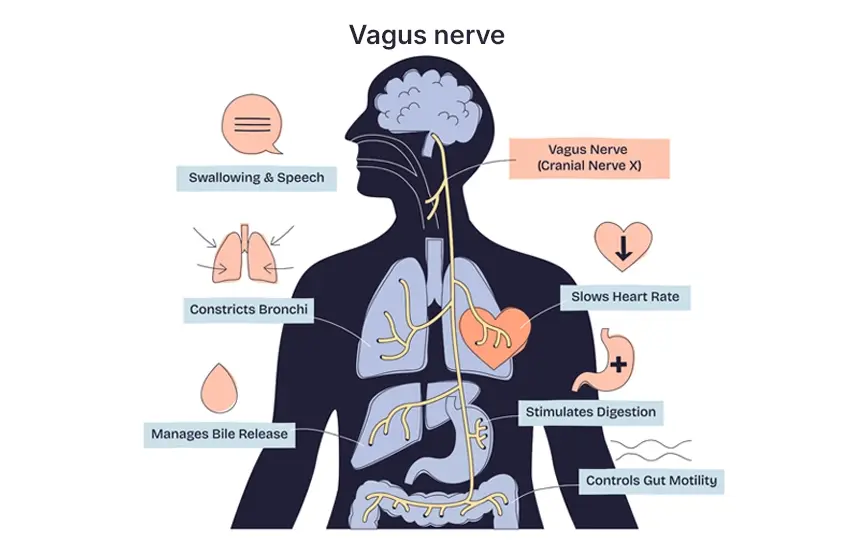
A single nerve controls whether your nervous system stays in threat mode or shifts to calm mode. It’s called the vagus nerve.
When it’s active, your heart rate slows, breathing deepens, muscles relax. Sleep becomes possible.
When it’s not active, your body stays in overdrive — scanning for threats, staying alert, never fully resting.
But here’s the problem: when your nervous system is already in overdrive, it’s nearly impossible to activate this nerve naturally.
You need a direct way to turn it on.
The Deep Pressure Technique That Activates Your Vagus Nerve
This is where deep pressure therapy comes in.
In 1965, a scientist named Temple Grandin discovered that firm, steady pressure applied to the body activates the vagus nerve directly — bypassing the brain entirely.
The pressure signal travels through mechanoreceptors in the skin, straight to the vagus nerve. No thinking required. No conscious effort. No willpower.
Your nervous system receives the signal and shifts out of threat mode on its own.
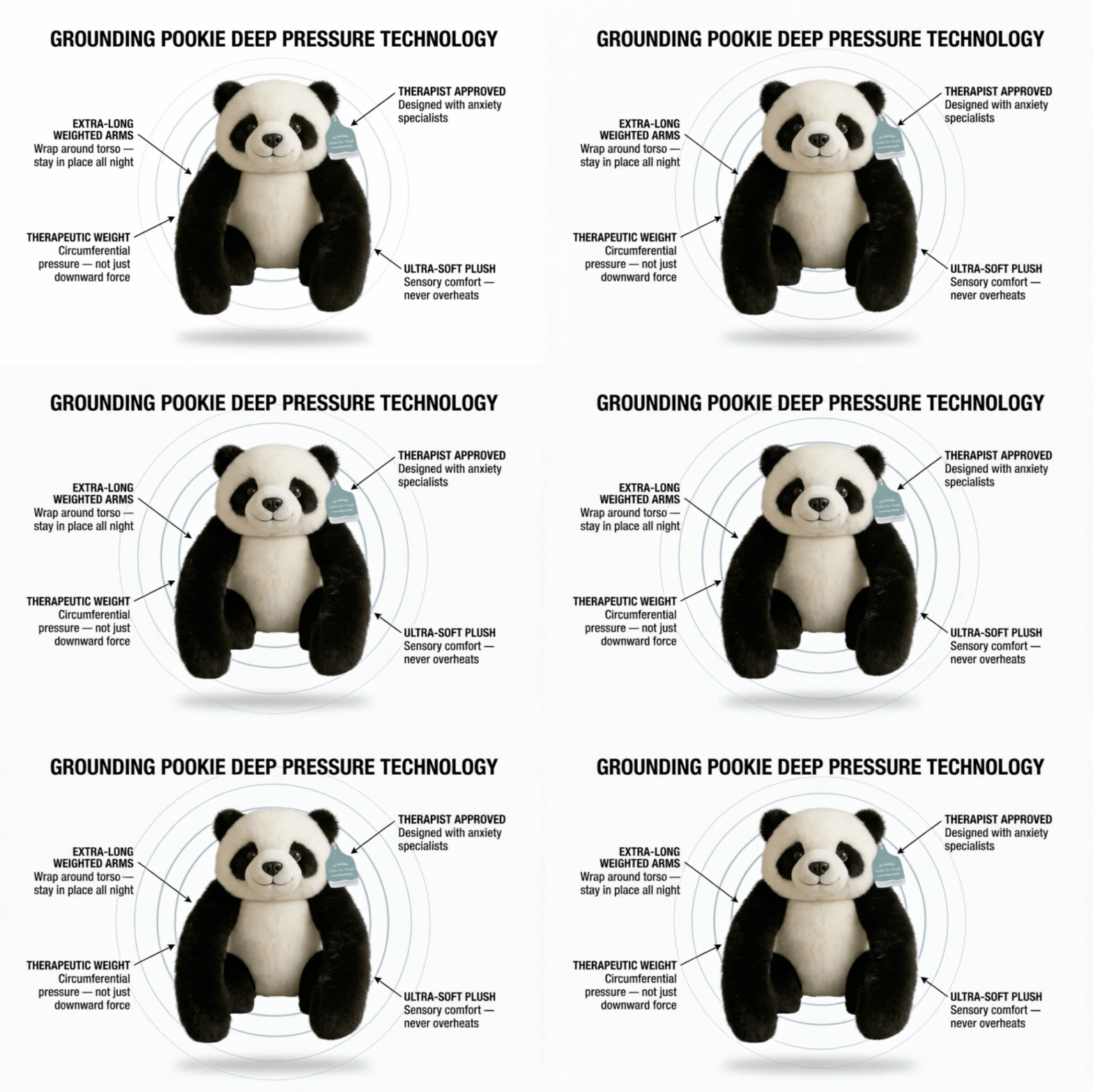
Dr. Mitchell told me about a product called the Grounding Pookie. It uses deep pressure therapy — a calming technique that applies gentle, weighted pressure to the body, similar to the feeling of being held.
It has extra-long weighted arms that wrap around your chest and stay in place. When you hug it or let its arms wrap around you, it sends a direct signal to your vagus nerve that says: “You’re safe. You can slow down now.”

This physical cue helps:
- Lower cortisol levels (the stress hormone)
- Reduce anxiety and overwhelm
- Calm racing thoughts
- Boost serotonin and dopamine (your feel-good chemicals)
- Support better focus and deep sleep
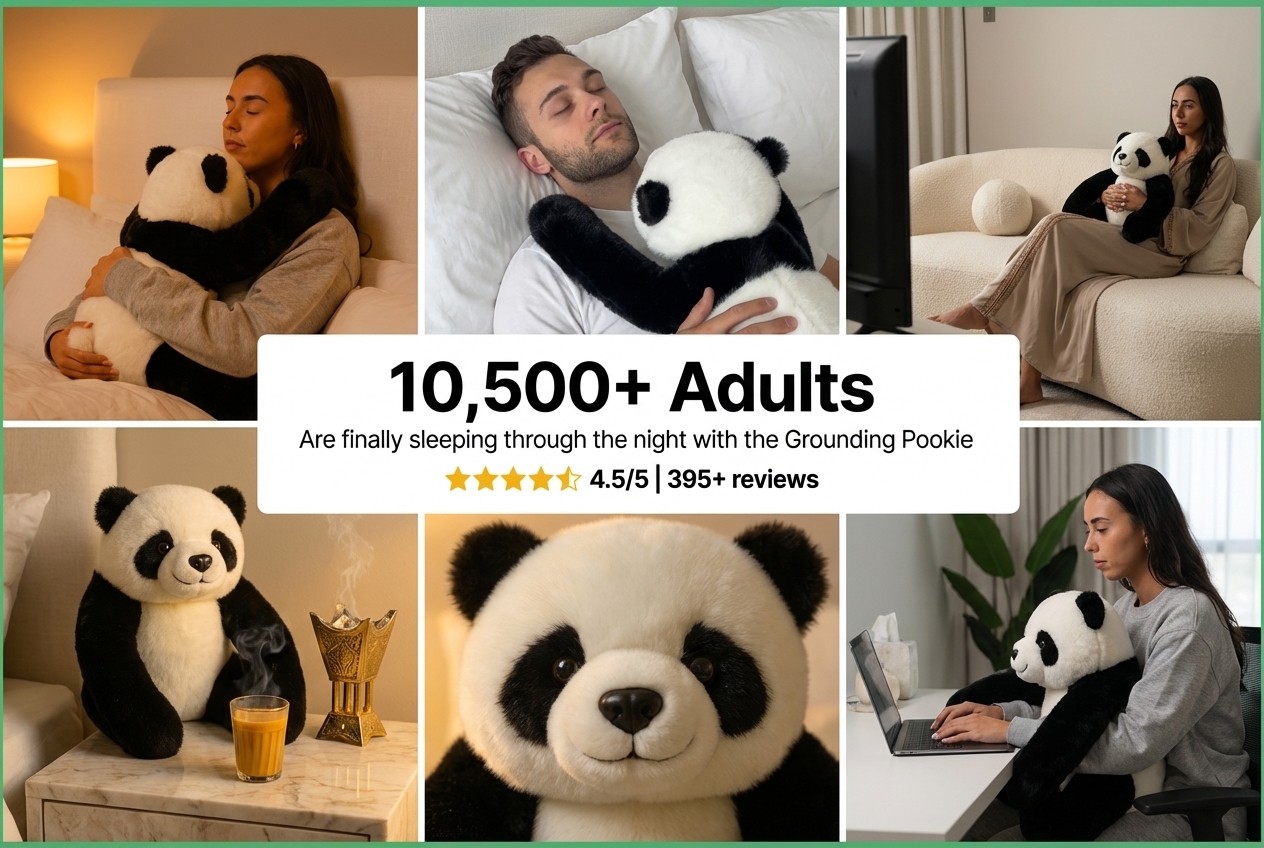
Whether you’re at your desk, in bed, or on the couch — it provides an instant wave of calm when you need it most.
Most people hold it against their chest at bedtime. It works while you sleep. No apps. No effort. No brain cooperation required.
Study Shows Deep Pressure Reduces Nighttime Wakeups Significantly
- People using deep pressure were 26x more likely to stop waking up in the middle of the night (2020 clinical trial, Journal of Clinical Sleep Medicine)
- 63% reported lower anxiety after just 5 minutes of deep pressure stimulation (2008, Occupational Therapy in Mental Health)
- 31% average reduction in cortisol — the primary stress hormone
- 32% increase in melatonin at bedtime — your body’s natural sleep chemical
- Over 10,500 adults have already made the switch
In a separate review, 8 out of 10 users reported noticeable improvements in sleep quality within the first week.
Sleep Through the Night — Or Your Money Back
“For years, people have been told they have insomnia, that it’s just aging, or that they need better sleep hygiene. None of those explanations address what’s actually happening.”
“The real issue is nervous system hyperarousal. And the most effective way to address it is direct deep pressure stimulation — not through the brain, but through the body.”
“You’re not chasing myths anymore. You’re addressing the root cause.”
The Grounding Pookie comes with a 30-night money-back guarantee. If you’re still waking up at 3AM, if your nervous system isn’t calming down, just send it back. Full refund. No questions.
Right now, they’re offering 30% off as part of a limited sleep awareness campaign — the lowest price available.
Which means you can finally stop the 3AM wakeups without believing another myth or wasting months on solutions that don’t address the real problem.
Limited Time Offer — Get the Grounding Pookie for 30% Off
CLAIM MY DISCOUNTResults may vary based on individual response.
⚠ Limited stock remaining — offer may expire soon
Comments (11)
Leave a Comment